


 By
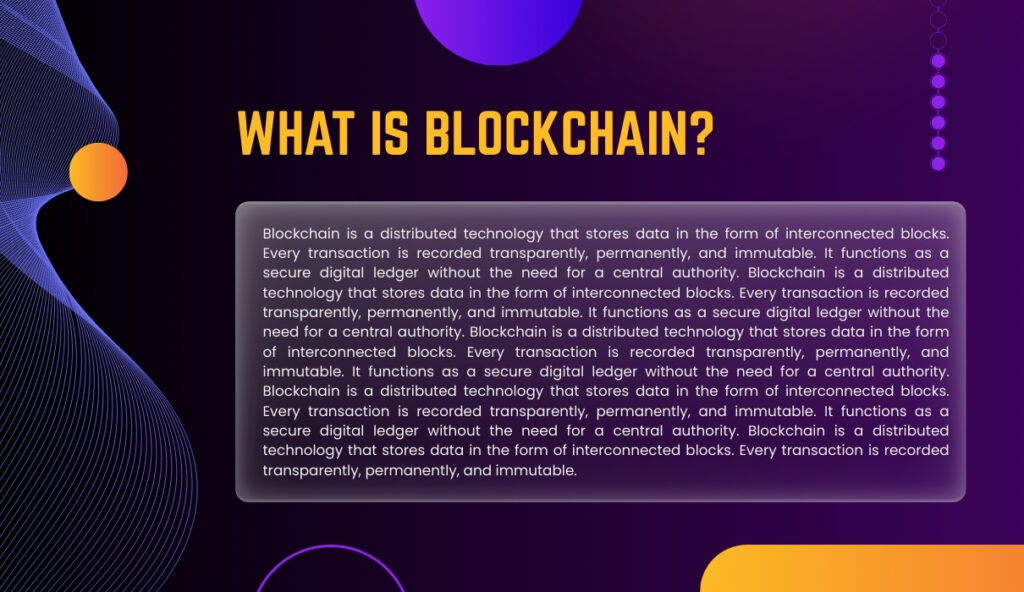
By Have you ever thought about what blockchain is? You hear the word a lot in relation to Bitcoin, NFTs, and the future of the internet, but the explanations can get confusing very quickly. Let’s make that better. This article will use simple words and pictures to explain blockchain and give real-world examples.
By the time you finish this post, you will know:
- What a blockchain really is.
- How it operates without a bank or other central authority.
- What makes this technology so new and different?
- Blockchain in the real world, not just for Bitcoin.
- What is a Block? The Parts That Make Up the Chain
Let’s start with one “block” before we get to the “chain.” You can think of a block as a page in a digital document. This page keeps track of transactions or information.
There are three main things in each block:
Data: This is the exact information that was written down. For a cryptocurrency like Bitcoin, this information would include the amount of money sent, the person who sent it, and the person who received it. It could be a contract, a vote, or a medical record for other purposes.
A hash is a unique identifier for each block, like a fingerprint for digital data. The code is hard to read because it comes from the data in the block. The hash changes completely if you change even one comma in the data.
The fingerprint of the previous block is what connects the blocks. Every new block has the hash of the block that came before it.
[Visual Description: A picture of three different digital blocks. The first block is called “Data” and includes basic information about transactions. The second block has a series of arbitrary letters, such “0x1a2b3c…,” on it. The third block has a string of characters that looks like the one in the first block.
What does the “Blockchain” part do?
Now, let’s link these blocks together to make a chain. Think of it as a block with a page from a notepad on it. When it gets full of transactions, you make a new page. But to keep it safe, you put the unique fingerprint (hash) of the last page at the top of the new one.
This makes a link. The second block is now linked to the first block by a cryptographic key. The hash of the second block will be in the third block, the hash of the third block will be in the fourth block, and so on. This makes a chain of blocks that goes in order and doesn’t break.
[Visual Description: A picture of three blocks joined in a chain. There is an arrow that goes from Block 3 to Block 2 and then from Block 2 to Block 1. Block 2 has the “Hash of Block 1,” and Block 3 has the “Hash of Block 2.” This demonstrates the dependency in a way that is easy to see.
This is what makes a blockchain so safe.
Why is this so safe?
Let’s imagine a hacker wishes to change a transaction in Block 10.
- They alter the information in Block 10.
- This update makes a fresh, distinct hash for Block 10 right away.
- There is a discrepancy in Block 11, which holds the original hash of Block 10. The link doesn’t work.
- The hacker would have to modify the hash in Block 11 to hide their trail. But that alters the hash for Block 11, which means they would have to change Block 12, and so on, all the way to the end of the chain.
It’s like trying to change a page in a book that has been photocopied and given to a lot of people without them knowing. You would have to find every single copy and change them all at the same moment for your change to persist. It’s almost impossible.
The Key to Success: Decentralization
Decentralization is the last piece of the puzzle.
A bank is an example of a traditional system where all the data is kept on one server. If someone hacks the server, the data is at risk. But a blockchain is a ledger that is decentralized and spread out.
Ledger: It’s a book where you write down all your transactions.
Distributed: Instead of one person or firm keeping the ledger, a lot of computers all over the world share a copy of it.
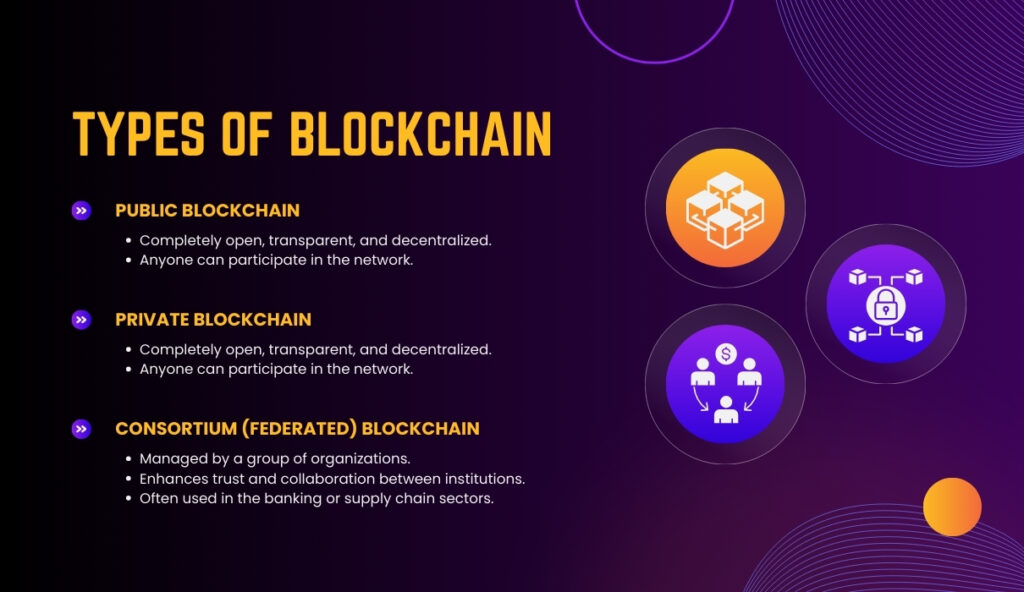
Decentralized means that there is no one person or group in charge. Everyone on the network works together to keep the ledger up to date and check that it is correct.
Everyone on the network gets the new block when it is introduced. The nodes, or computers on the network, review the block to make sure the transactions are real. If most people think it’s valid, the block is added to everyone’s chain.
Visual Description: A graphic that shows the difference between a centralized network (with one central hub and lines going out to numerous points) and a decentralized network (with many points all connected to each other and no single hub). This shows how a bank’s server and a blockchain network are different.
Because it is decentralized, the system is open and hard to change. To hack the chain, you would need to control more than 51% of the machines on the network and change all of their ledgers at the same time. This is a very hard and expensive thing to do.
A Simple Analogy for Blockchain
Picture a classroom where the teacher keeps track of everyone’s grades in a private notebook. The teacher is the only one who can see or modify it. That is a system that is all in one place.
Now, picture a big whiteboard at the front of the class instead of a private notebook. The teacher writes down the grades on the board so that everyone may see them. At their desks, each student also has a copy of what is on the whiteboard.
If someone tries to sneak in and modify a grade on the main whiteboard, all the kids will see it right away because it doesn’t match the one on their desks. The fake alteration would not be accepted. A blockchain is a public, shareable, and verified record. That’s how it works.
What is the purpose of blockchain? More than Bitcoin
The most well-known usage of blockchain technology is in cryptocurrencies, but it can do a lot more than that. A lot of businesses can use it because it can make a record that is safe, clear, and can’t be changed.
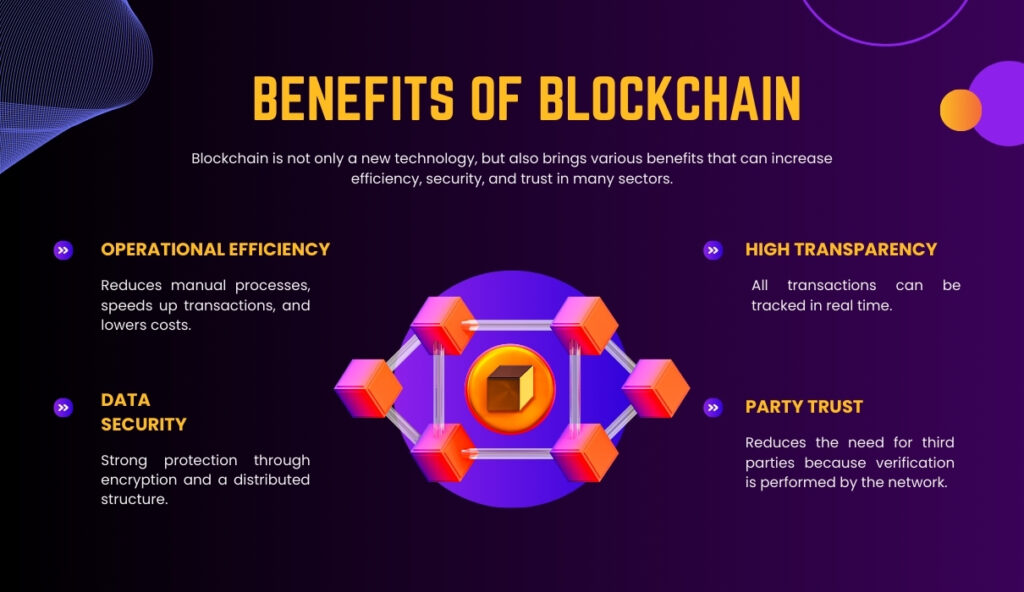
- Managing the supply chain, Blockchain can help businesses keep track of their items from the manufacturing to the store shelf. Each step, such as harvesting, shipping, and delivery, is saved as a block. This lets businesses and customers check if things are real and not fake. You could, for instance, scan a QR code on a bag of coffee to find out where it originated from and when it was roasted.
- Systems for Voting Blockchain could be utilized to make voting systems that are safe and clear. Every vote would be stored on a blockchain as a transaction. Because the data can’t be changed and anyone can check it, it could make people less worried about voter fraud and more confident in the results of the election.
- Contracts that are smart. These contracts run themselves, and the terms of the agreement are built right into the code. They run on the blockchain and automatically carry out their tasks when the requirements are met, so you don’t need a lawyer or other middleman. For example, a smart contract may automatically send a payment to a freelance writer as soon as they turn in their piece.
- Healthcare Blockchain can safely keep and distribute medical records for patients. Patients would be in charge of their own data and could let doctors or hospitals see it for a short time. This protects privacy and makes sure that a patient’s medical history is correct and can’t be changed. Important things to remember for 2025 As we move forward, knowing about blockchain is becoming less of a specialty skill and more of a basic idea for the digital world. This is what you should keep in mind: Blockchain is a series of digital blocks that hold data, like a digital record book. It was made to be safe: cryptographic hashes connect the blocks, which makes it almost hard to modify them. The record book is not owned by one company; instead, it is shared and checked by a network of users. It’s more than just crypto; every day, it finds new uses in healthcare, contracts, and supply networks. You won’t think of blockchain as just a buzzword the next time you hear about it. It’s a strong technology that makes it easier to handle digital information in a more secure, open, and direct way.
At CryptoAnimatics, we combine expertise with simplicity to deliver reliable crypto education. Whether you’re a beginner or an experienced trader, our mission is to keep you informed, inspired, and ready for the opportunities ahead. The future of finance is here, and it starts with knowledge. At CryptoAnimatics,Our professionals are equipped with the tools and insights to help you navigate the crypto world with confidence. Together, let’s shape tomorrow and build a future of growth and innovation.